
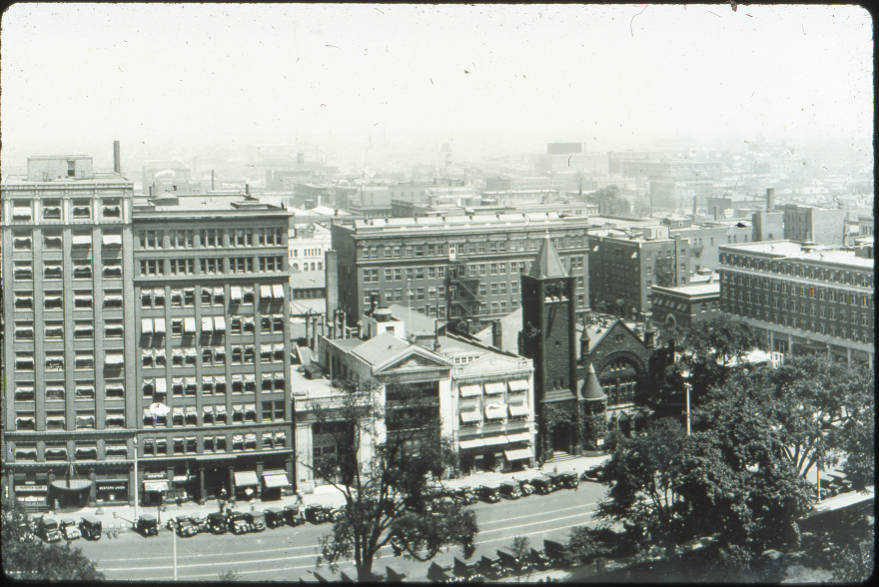
In the early twentieth century – legend has it – a young man was on his way to work (night shift) and on a lark walked into a gambling house in downtown Columbus. Lady luck was with the ‘Irish Buckeye’ that day – so much so – that he walked out as the new owner of said establishment.
And so began the saga of Columbus’ most famous gangster.
Prohibition began on January 17, 1920. By 1925 – five years in – the demand for illegal liquor in Columbus had reached such heights that it was being shipped in by rail car. Law breakers were getting bold. The state’s welfare garage downtown was being used as a ‘rendezvous’ for bootleggers. A French Professor at the Ohio State University was arrested for possession of a 30-gallon still. Parties at Columbus City Hall were generally not of the dry variety.
The Anti Saloon League was based in Westerville, Ohio, and was pumping out forty tons of literature a month. By 1925 the ASL had successfully lobbied Congress to increase the fines & penalties for the manufacture, sale and/or transportation of alcohol to between $200 to $400. One man was fined $150 for possessing fifty half pint bottles.
Columbus was a city of 250,000 people and growing. Prohibition had hit the prodigious German brewery district on the south end like a freight train. With the passage of the Volstead Act in 1919, the last brewery standing was Gambrinus. August Wagner bought up his breweries’ stock and survived Prohibition by bottling soft drinks for fourteen years.
The Clock Restaurant opened in 1925 in the Larrimer building on High Street downtown. Rumor has it there was a tunnel underground to hidden alcohol. Legislators knew about the tunnel. The restaurant served porterhouse steaks for .95 cents and spaghetti with bread & butter for .25 cents. They also served malted shakes, soft drinks and sandwiches.
Prior to Prohibition, Columbus had 469 saloons according to the number of alcohol licenses pulled. In 1925 there were 350 restaurants and ZERO saloons. Confectionaries, however, opened with a “suspicious rapidity”. Estimates were around 250 such stores. It was not illegal to buy sugar and malt (as long as fudge was being sold).
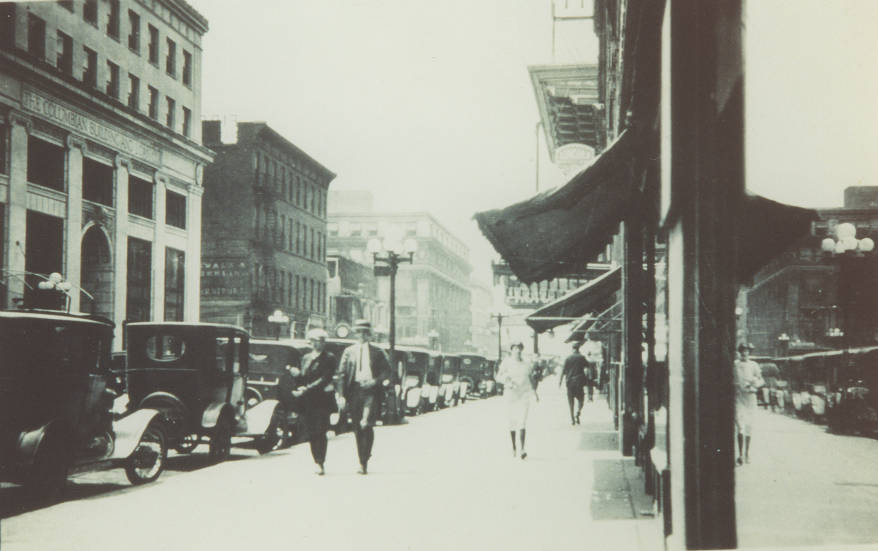
East Gay Street in Columbus 1925
Speakeasies in Columbus were prevalent during Prohibition. History tells us there were (by some reports) up to 1000 in our city and as many as 4000 bootleggers. There were no less than nine speakeasies within two-tenths of a mile between Hudson & Arcadia along High St. “The beer flowed freely in North Columbus,” according to Columbus historian Doreen Uhas Sauer.
In the German predominated south end, rumors have persisted over the years around the ‘Old Mohawk’ and ‘Barcelona.’ Both converted to be a ‘grocer’ during Prohibition selling…groceries. Both restaurants are still serving Columbus today and both are absolute city jewels. The ‘Old Mohawk’ on its website admits to operating as a brothel and speakeasy during Prohibition.
The face of ‘Wet’ in Columbus during Prohibition, however, has to be the ‘Hey Hey Bar’ at 361 E Whittier St. The ‘Hey Hey’ was built by the Hoster Brewing Company in 1900. It was sold in 1915 and when Prohibition hit in 1919, the owners covered up its windows to become a ‘lunchroom’ where patrons came to play cards. The hayloft in the adjacent barn was used to hide bootleg liquor. Local bootleggers supplied the beer. They would quietly knock on the door and say “hey, hey, the beer is here.” The bar was renamed ‘Hey Hey’ in 1933 when the eighteenth amendment was rescinded.
Debate continues to this day as to the circumstances surrounding the appearance (if at all) of famed Chicago gangster Al Capone in Columbus, Ohio. The Old Mohawk feeds the flames of rumors on their website and his possible appearance at their establishment. Capone is said to have met with Columbus’ lone gangster Pat Murnan,the ‘Irish Buckeye’, in a meeting to discuss possible expansion. No one knows what was said but we do know, Capone never expanded to Columbus.
Pat Murnan owned a taxi business in Columbus but made his money through his gambling operations that was run above the Doersam’s Restaurant at 13 ½ W. Broad St. His business grew. He soon met & married Grace Backenstoe who ran a brothel at Broad & Front.
Murnan was a loud dressing and charismatic sort who always carried a gold headed cane. He donated generously to local charities and became a popular figure around town.
Patrick Murnan died in 1937. He was 71. He is buried at St Joseph’s Cemetery.
Al Capone was convicted of tax evasion in 1931. He spent eight years in jail.
Murnan’s 700 acre ‘Graceland’ stock farm (named for his wife) sat along North High St near Morse Rd. Portions of the property make up Wesley Glen retirement home today and the Graceland shopping center.
Pat & Gracie’s kitchen & tavern – known for its scratch made tavern food – was named after the couple and opened in Graceland Mall in July, 2016.
Sources: Columbus Neighborhoods by Tom Betti, Ed Lentz & Doreen Uhas Sauer, 2013; ‘Wet & Dry’ by Beth Stallings, Columbus Monthly, Jan 27 2014; www.oldmohawktavern.com; ‘Downtown Commission votes to demolish Main Bar upsetting Columbus Landmarks’ by Mark Ferenchik and Jim Weiker, Columbus Dispatch, June 23 2021; Prohibition in Columbus Ohio by Alex Tebben, 2017; Columbus Mileposts: May 13, 1937 Gambler had diamond studs and a heart of gold, the Columbus Dispatch, May 13, 2012; www.findagrave.com; Patrick Murnan by Shirley Hyatt, www.clintonvillehistory.com; Clintonville & Beechwold by Shirley Hyatt, 2009; http://digital-collections.columbuslibrary.org .