
A year before Johann Christoph Friedrich von Schiller passed away, he wrote ‘William Tell,’ the tale of a fourteenth century Swiss huntsman who attempted to free the commoners from its oppressor – the King of Austria. Swiss governor Hermann Gessler was sent by the King to take control of three Swiss states and prevent an uprising.
Gessler proceeded to capture and jail commoners, so many that he built a massive second prison. Despite his wife’s fears, Tell and his son Walter departed with bow in hand for the prison where he was subsequently detained by a guard. Gessler was then notified.
Tell had a reputation as a skilled bowman. When Gessler arrived at the prison, Tell’s son Walter bragged that his father could hit an apple from one hundred yards away. Gessler quickly proposed a demonstration: Tell must hit an apple placed atop his son’s head. If he hits it, he would be set free. If he missed, Gessler would have him executed.
Tell begs Gessler to reconsider. He is unmoved. Walter reassures his father he will stand still. Tell removed two arrows from his quiver, notched one, and successfully shot the apple without harming his son.
The second arrow, however, got Tell arrested. If he missed, he told Gessler, it was meant for him. Tell was then jailed but soon escaped. The rebellion united. Tell ambushed Gessler later, killing him with a single arrow through the heart. The King of Austria was subsequently killed as well.
Long live William Tell.
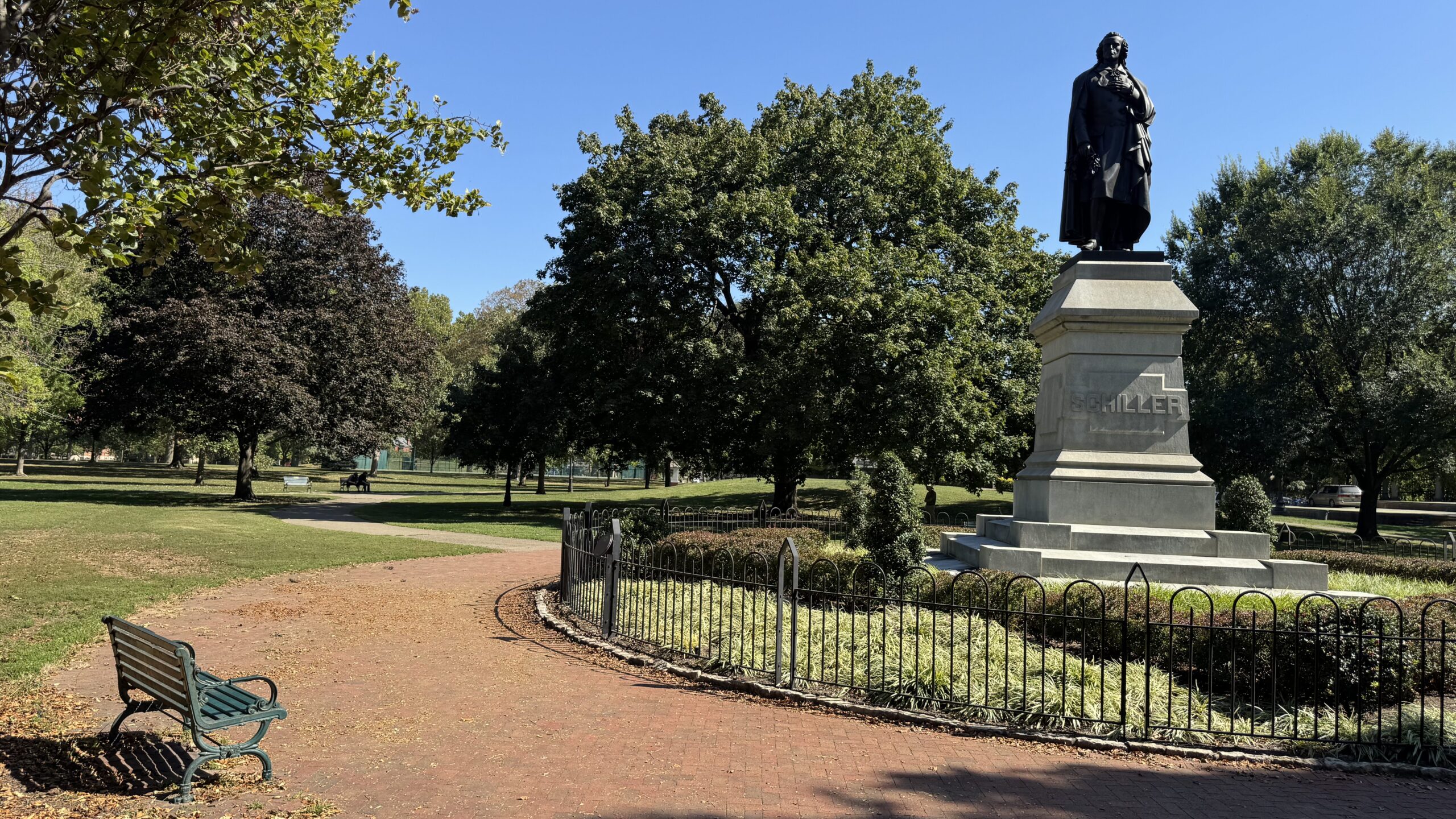
German immigrant Judge Henry Olnhausen, at a meeting of one of the benevolent societies in 1886, proposed a statue be erected at then City Park in Columbus of the great German poet, playwright and philosopher Johann Friedrich von Schiller (1759 -1805). The proposal passed unanimously and was met with great enthusiasm.
Local residents raised $6500 to purchase the 11-foot tall, 2600 pound bronze statue cast at the Royal Bronze Foundry in Munich, Germany by sculptor Max von Widnmann. It was dedicated on July 4, 1891. Ten thousand people showed up in Columbus to see a parade, fireworks and speeches by the governor, the mayor and various city officials.
Fourteen years later, in 1905 on the 100th anniversary of the passing of Friedrich von Schiller, City Park was renamed to Schiller Park.
The land that Schiller Park sits on is some of the city’s most hallowed ground, even before being designated City Park in 1867. A local man named John Stewart owned 620 acres in the early 1800s and because of the beauty of the area hosted the 4th of July celebration there in the 1830s. His acreage sat on the fringe of the city limits, and he called it Stewart’s Grove.
In 1845 local German men were sworn in for military duty at Stewart’s Grove and then they marched off to serve in the Mexican American War. They returned to a victory celebration on the same ground three years later.
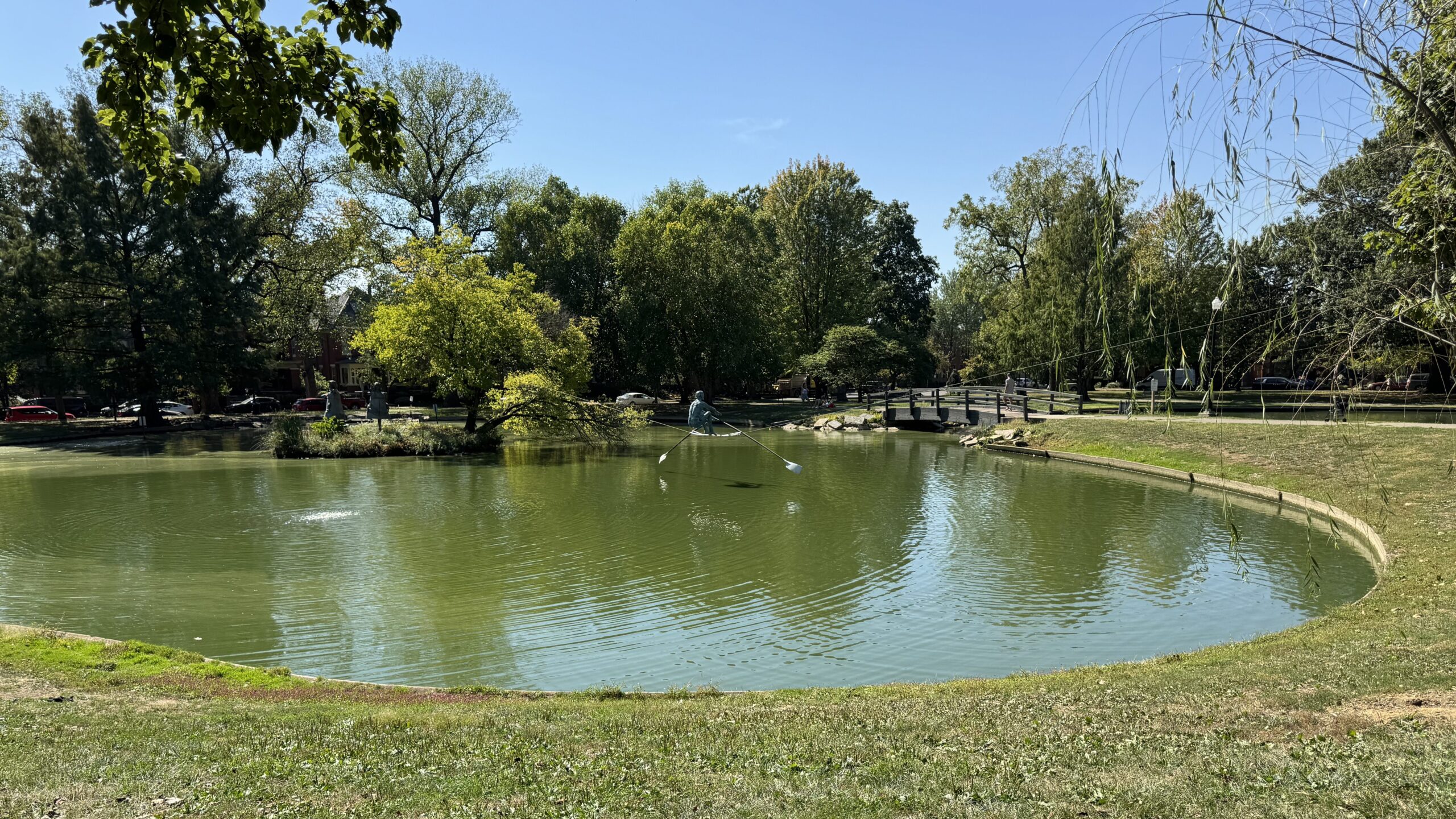
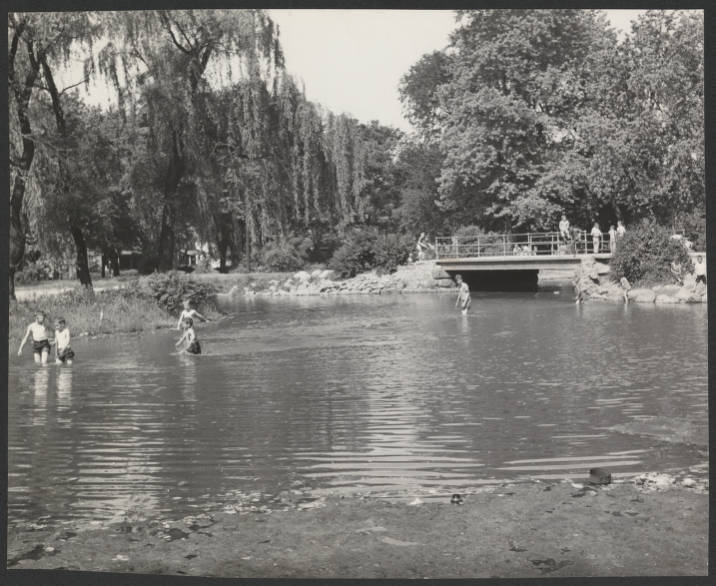
German singing societies from New York and St Louis were hosted there in the 1850s, and later the Ohio State Fair in 1864 and 1865. The city purchased a mostly wooded 23.5 acre parcel in 1867, christened the land City Park on July 4, and added a spring fed horse pond with a boathouse, a small zoo and an Umbrella Girl statue. The small zoological area in the park’s southwest corner featured an eagle, a buffalo, bears & foxes. This area lasted until the turn of the century.
Because of anti-German sentiments with the onset of WWI, in 1918 the city changed the park’s name to Washington Park. The name was changed back in 1930.
Today Schiller Park is listed on the National Register of Historic Places. It is Columbus’ second oldest city park.
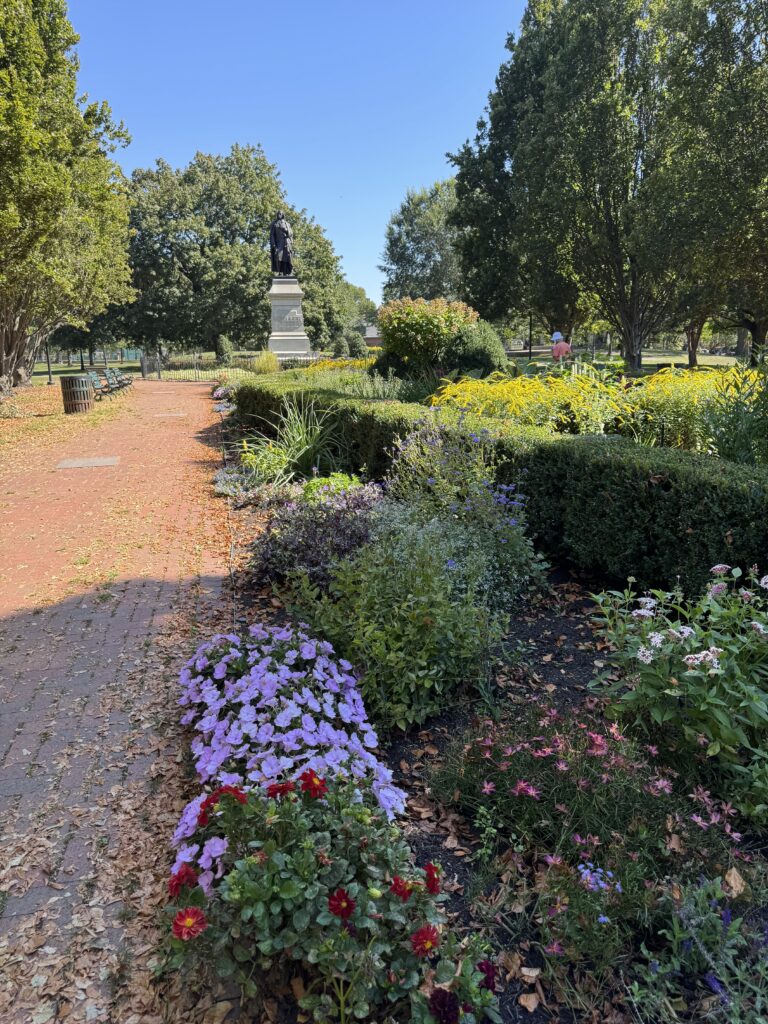
Friends of Schiller Park was chartered in 1981 when four mothers who wanted to improve the park’s playground and plant a few trees ended up creating something more permanent. The group has raised nearly $2 million for park maintenance and upgrades in its forty five years of existence which includes the four-season Huntington Gardens; the park amphitheater that was built in 1994; and the Schiller monument enhancements commemorating the city’s bicentennial in 2012.
Actor’s Theatre, a performing arts group that debuted in 1982, puts on a free production series of Shakespeare plays in the park’s amphitheater every summer from Memorial Day to Labor Day.
And, while campaigning for re-election in 2012, President Barack Obama held a campaign stop in Schiller Park.
The Germans sense of community and gratefulness for their newly adopted country led to their extravagant public displays on the Fourth of July. Columbus’ Red, White & Boom celebration, one of the largest fireworks displays in the Midwest, is rooted in that history.
In their mind, Johann Christoph Friedrich Schiller, dubbed the ‘poet of liberty,’ was the perfect representation to show their love for America. His words resonated with those who sought to preserve their German language and culture, while proudly becoming American citizens.
As America celebrates the 250th year of these United States, we also embrace Columbus’ cultural heritage. Schiller Park is one of the city’s most representative connections to its deep past. The park’s historical panoply of community and patriotism is profuse.
A generation ago, a group of citizens from all nationalities came together to preserve, enhance and continue to caress its beauty for those to come. That’s the America we all know and love.
Sources: Columbus Neighborhoods – a guide to the landmarks by Tom Betti, Ed Lentz and Doreen Uhas Sauer, 2013; Remembering German Village by Jody H Graichen, 2010; Vintage Postcards of Columbus, OH 1898 – 1950 by Richard Barrett; Historic Columbus Taverns by Tom Betti & Doreen Uhas Sauer, 2012; HowExpert Guide to Columbus, Ohio with Meghan Tarney; The Columbus Germans by La Vern J. Rippley (1998); Images of America – German Columbus by Jeffrey T. Darbee & Nancy A. Recchie, 2005; Schiller Monument by Chuck Cody, Columbus Historical Society, Feb 2018, Sep 2018; The story of the Schiller monument, Schiller Park; William Tell by Friedrich Schiller, SuperSummary, www.supersummary.com; German Village stories behind the bricks by John M Clark, 2015; A community tradition by John Clark video, www.friendsofschillerpark.org; Featured picture of Schiller statue taken in the summer of 2025.