
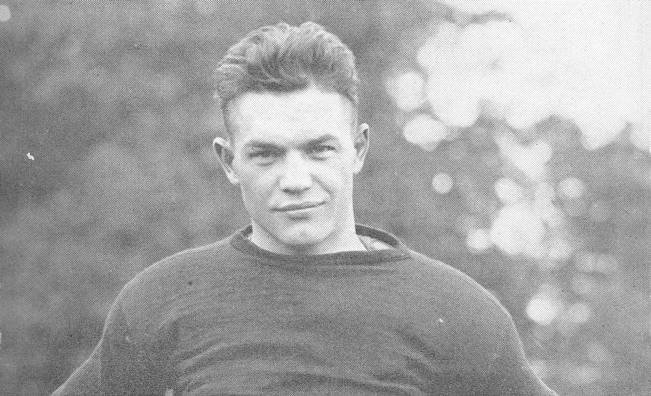
Entering the college football season in 1919, Ohio State sported a 0-13-2 record against the University of Michigan.
Charles ‘Chic’ Harley, an East High School product, had enrolled at Ohio State in the fall of 1916. He was small but elusive. Michigan – a midwestern football powerhouse – had left the Western Conference (later called the Big Ten) in 1913.
With Harley (and no UM), the Buckeyes won the conference championship in 1916 and, after outscoring their opponents 292-6, again in 1917. Then WWI arrived. Harley enlisted and became a pilot in the Air Force. He was stationed at Kelly Field in San Antonio.
College football rosters for the 1918 season were decimated while Michigan had rejoined the Western Conference. On November 11, 1918, the armistice between the Germans and the Allies was signed ending the war. Chic Harley didn’t get back to Columbus until July 17, 1919.
Football season was coming.
On October 25, 1919, in Ann Arbor, Chic Harley – in his first and only game against TTUN – scored on a 42-yard second half touchdown run and had two interceptions leading the Buckeyes to a 13-3 win.
And the behemoth that is Ohio State football was born!
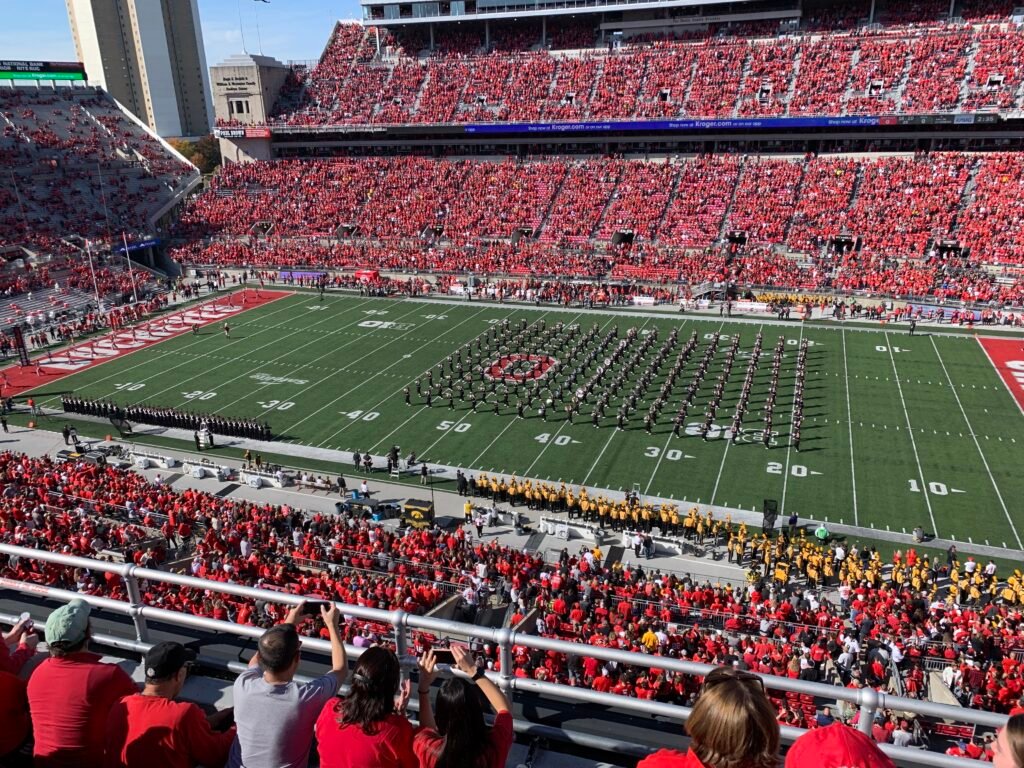
Ohio State University went on to build the massive Ohio Stadium, but this isn’t that story. After Harley graduated, his health took an unexpected and sharp turn south. This is the story of a university that did the right thing and would not let him go.
Harley had shown peculiar behavioral symptoms in his football years and was later diagnosed with dementia praecox. This was a chronic deteriorating condition with no cure. Chic, a typically quiet and humble young man, was suddenly experiencing uncontrollable emotional episodes and rage. Harley spent most of 1923 and 1924 living with his parents in Chicago.
Ohio State Athletic Director Lynn ‘LW’ St. John sat down with a couple of psychiatrists who recommended he be admitted to the Dayton State Hospital. Harley agreed to a voluntary thirty days. These were the days before insurance. Friends of Harley and wealthy businessmen therefore were recruited to pay for his care. At the very same time, Ohio Stadium was being built and was close to being completed.
Chic Harley did make it to the stadium’s dedication on October 21, 1922, against Michigan. On hand as well were President Warren G Harding, Orville Wright, Knute Rockne and John W Heisman. Dark days, however, were ahead as his uncontrollable anger outbursts intensified.
In 1930, Chic’s father Charles died. Chic then moved in with his sister. In 1932 St. John sent a doctor to Chicago to check up on him. The two-page report was not good. There was no medical reason for his illness. His anti-social behavior was deemed psychological and had deteriorated. When Harley took up the ‘wandering habit’ he was finally institutionalized in 1938 at the VA Hospital in Danville, Illinois where he would spend the rest of his life.
Friends of Chic refused to give up on him. While he was clearly not well and prone to break out in fits of rage at any time, they still came to visit him. And Danville was not an easy drive from Columbus. The ‘Harley Fund’ for his hospital care was still taking donations thirty years out.
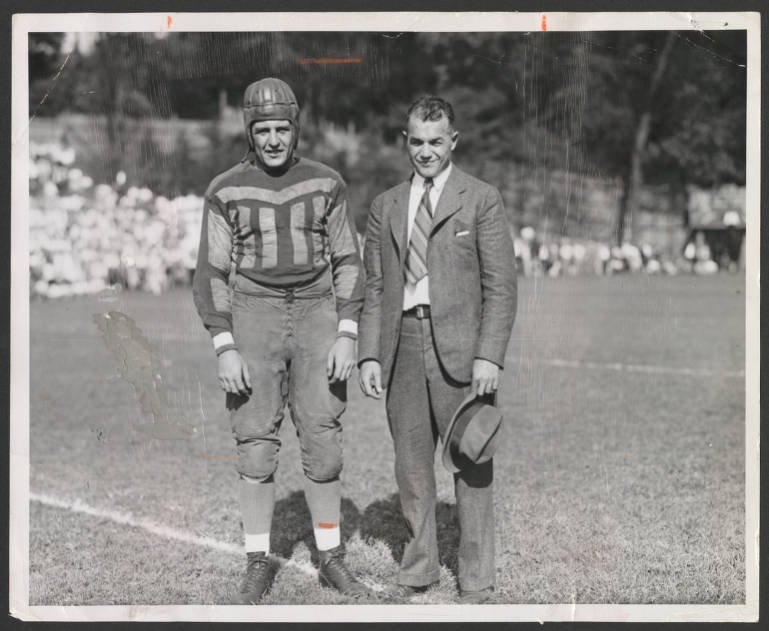
Lynn St. John kept close tabs on Harley. He was the true hero in this story. Shortly after being admitted to Danville in 1938, the Buckeyes had a game in Champaign thirty-five miles away vs Illinois. The athletic department and coach Francis Schmidt arranged with the hospital for the Buckeyes to hold their Friday practice on the hospital lawn so Harley and thousands of patients could look on.
Chic’s state improved in 1948 so much so that his brother Bill took him to three different Buckeye away games – Indiana, Northwestern and Illinois. Chic was able to reunite with his former teammate Leo Yassenoff.
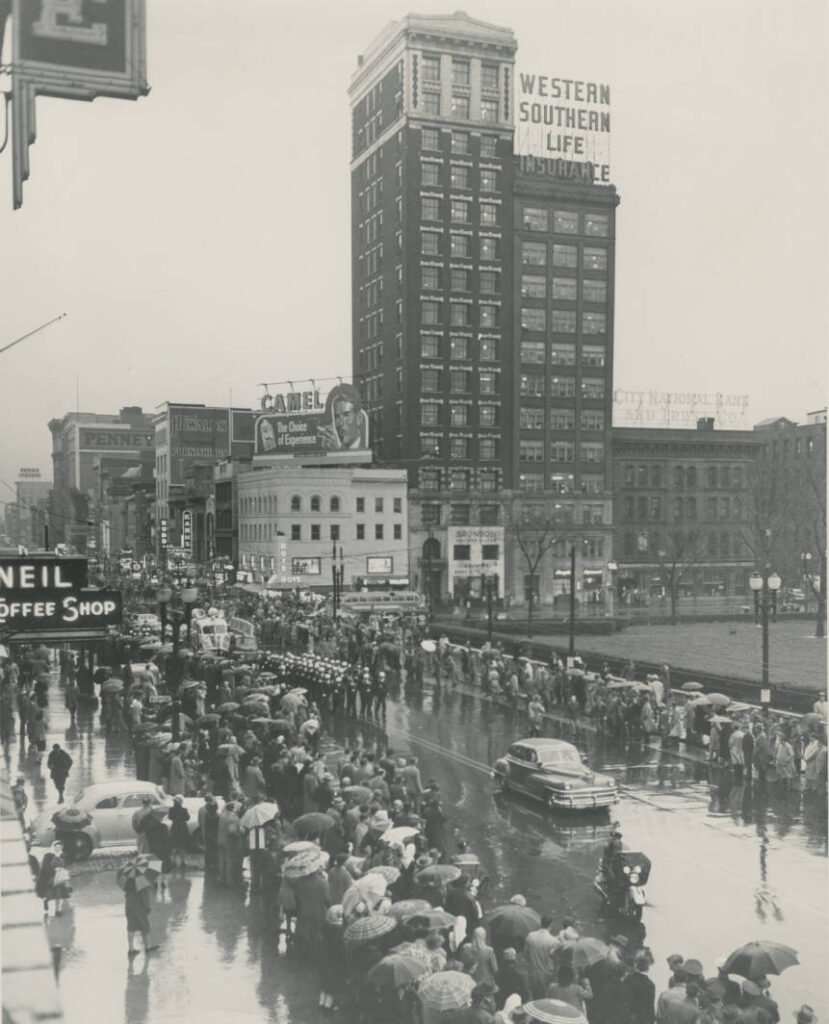
Harley arrived at Union Station in Columbus for the Homecoming game in 1948 vs Michigan. It was a reception only comparable to that of Eddie Rickenbacker. Thousands waited as he and his brothers Bill and Walter got into the backseat of a convertible to lead a ticker tape parade of five cars, twenty-one floats and the OSU marching band down High Street to the statehouse before 75,000.
The rain stopped as they reached the Ohio Statehouse. Thirty to forty policemen held the crowd back. Mayor Rhodes and Governor Herbert were there to greet Harley. He was then taken to the Deshler – Wallick Hotel where they would stay. The game was the next day. Lots of former teammates came to see him.
Louise Havens – now Mrs Russell Paul – Chic’s one time girlfriend – came to see him. For the game, Chic sat in Section 18A as #1 Michigan beat the #18 Buckeyes 13-3.
Chic Harley was inducted into the College Football Hall of Fame’s first class in 1951 alongside Jim Thorpe, Red Grange, Bronco Nagurski, Sammy Baugh, Amos Alonzo Stagg, Niles Kinnick and twenty others.
Chic Harley died of pneumonia on April 21, 1974, in Danville, Illinois. He was 78. Ohio State’s five football captains served as his pallbearers – Archie Griffin, Arnie Jones, Neil Colzie, Steve Meyers and Pete Cuzick plus Kurt Schumacher. Harley is buried in Union Cemetery.
Chic Harley and Babe Ruth were born the same year – 1895. Both ushered in the golden era of sport. Both were personally responsible for the construction of massive stadiums that still live in the 21st century.
Lynn St. John served as Ohio State AD for thirty-three years. He died in 1950 at the age of 73. In 1956, the university named its new basketball arena in his honor.
At halftime of the Penn State game on October 20, 2004, Chic Harley’s number 47 was unveiled and retired inside Ohio Stadium.
The Heisman Trophy wouldn’t begin honoring college football’s best until December 1936. 52-year-old John W Heisman attended the dedication game opening Ohio Stadum in October 1922, the house that Harley built.
The football gods got game.
Sources: Columbus Unforgettables, ‘Charles W “Chic” Harley by Paul Gingher; Thurberville by Bob Hunter; Chic – The Extraordinary Rise of Ohio State football and the Tragic Schoolboy by Bob Hunter; The football program that Harley built by Bob Hunter, Columbus Historical Society, September, 2023; 101 Things you didn’t know about Columbus, Ohio by Horace Marting Woodhouse (2010); The Ohio State University Football Vault by Jack Park (2008); Columbus Vignettes by Bill Arter, Vol III, 1969; Rites to be Friday for OSU Grid Great, Columbus Dispatch, April 22, 1974; UM vs OSU All-Time Results, www.bentley.umich.edu; www.heisman.com; Featured picture of Ohio State team captain and three-time All American Chic Harley in 1919, courtesy of the Columbus Metropolitan Library.