
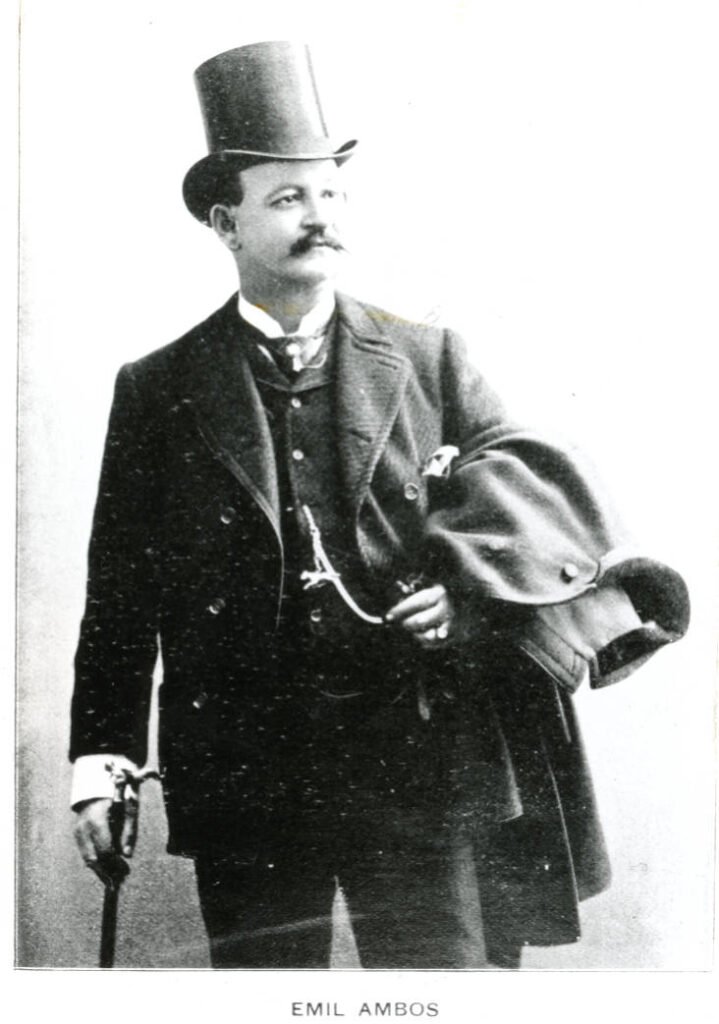
Emil Ambos wasn’t your typical rich guy. Born into a hardworking and eventually wealthy family, Ambos lived a lavish lifestyle for sure, entertaining at his lake estate almost every day. He also felt the pull of his heart which had him look out for the less fortunate children of the city.
Emil kept an elaborate three-story brick bachelor pad at 40 West Town Street in downtown Columbus. At the age of 22, he opened a liquor wholesaling business along with a tavern on South High St. He was immensely successful.
In his home he displayed framed artwork and statues made of fine Italian marble. He was a passionate horseman and built a second story bridge that led to his brick stable where he kept one of the city’s finest collection of horses, as many as 19. He also had a personal collection of buggy carriages, one for each day of the week.
Emil’s parents were kind of a big deal. His dad – Peter – was born in Germany in 1813, moved to Norfolk, Va and then to Columbus, Ohio where he opened the city’s first confectionery. He met and married Dorothea Yeager in 1841, the daughter of Christian Yeager, owner of a large swath of real estate in German Village.
Emil was born on April 22, 1844. The family had a mansion at 1201 S High Street near Gates St. He attended Kenyon College where he studied Botany. Emil became the unique combination of a fashionista and sportsman.
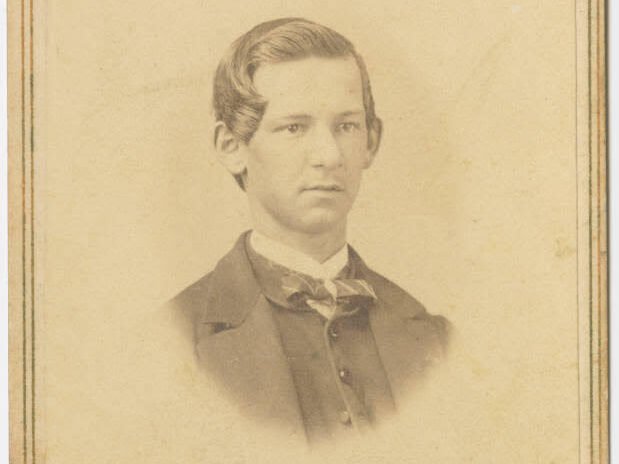
Meanwhile, his father rose in prominence in the business community, becoming a leader in finance. In 1863, he co-founded a bank that was the beginning of what is now PNC Bank.
In 1877, at the age of 33, Emil married Clara Owen. His father died the same year. The marriage, however, only lasted three years.
Each winter, he would escort a gaggle of poor boys and girls on the streets to Lazurus to buy warm clothing and sometimes ice skates. He was affectionately known around town as Uncle Ame. “Wherever he went there were those who would look upon him with honor and reverence,” wrote the Ohio State Journal.
At the age of 39, he retired. He possibly saw a big inheritance coming and wanted to pursue his philanthropic desires. And fish. His greatest love.
In 1886, shortly after his mother Dorothea died, he bought 116 acres near what is now Berwick (E Livingston Ave & College). It was a two-hour horse ride to get there. The property had twin spring-fed lakes that he stocked. He called it Ambos Pleasure Farm and invited his friends and family often. In fact, he would invite someone out to visit him almost every day.
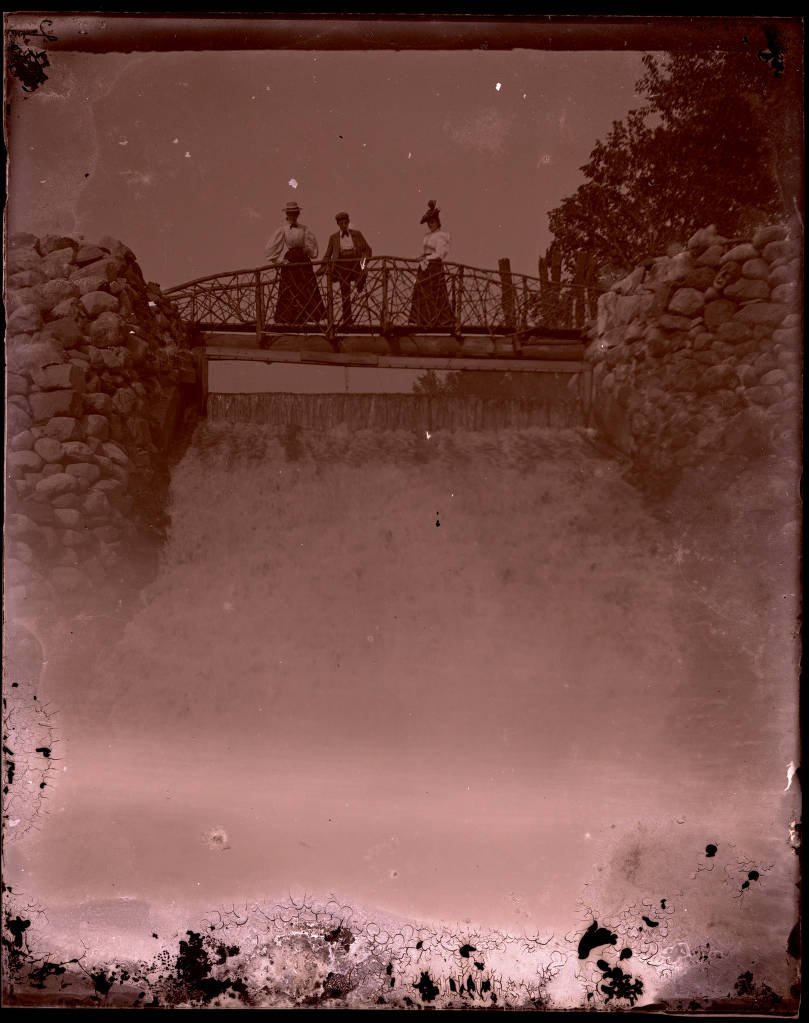
He built a cabin there on an island and had friends out to boat, fish, camp and ride horses. He also had cows, pigs, ponies, peacocks, pheasants and rabbits. He built a damn with a walking bridge; he had a water fountain, a water tower, a windmill and stables for his horses. He also had many different cabins for guests, a children’s playground and swings hung from trees. His paddle boat was emblazoned ‘Uncle Ame’.
Emil often invited impoverished children to the farm where – given the number of animals – he could offer them a petting zoo. They would boat and fish and then have a fish fry. He hosted fifteen impoverished children at his Town Street residence on Christmas Eve one year as well.
In 1898, at the age of 53, Emil Ambos died of liver disease. His story and legend, however, was only half over.
As it turns out, Emil’s seventeen-page legal will was one of the longest and most interesting ever probated in the county at the time.
Ambos left thirty acres from his lake estate to the city, but the property was far out and came with some legal issues. Council was split on whether to accept the property and take on the maintenance cost. A council member came up with the idea to hold a séance and contact the spirit of Emil Ambos to seal the deal. Apparently, the spirit of Emil Ambos when contacted, wasn’t too happy. He called the city council a bunch of ‘short skates’ and didn’t care if they accepted the land or not.
Ultimately the city council rejected the offer.
Emil left the bulk of his estate to Children’s Hospital, which had just opened in 1894 with nine beds. The money was donated only after interest earned on his cash became large enough to cover expenses to throw two elaborate parties for his fishing buddies. One at the Great Southern Hotel which the mayor attended and the other a couple of years later.
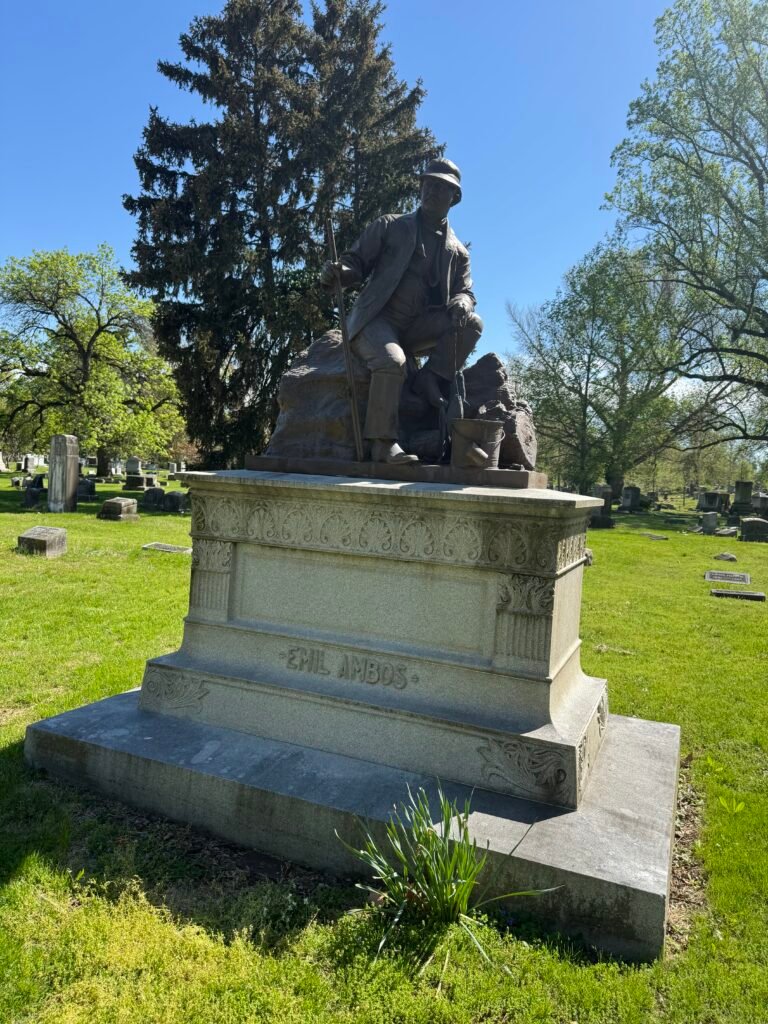
If you’ve ever been to Green Lawn Cemetery, make sure to stroll by ‘The fisherman of Green Lawn’ statue / head stone. Emil set aside $3,000 to $5,000 for a life size bronze statue to be made in his likeness, marking his grave. The statue, cast in 1901, is a fisherman, complete with a canvas coat, waders, boots and an outdoorsman’s hat, while holding an unjointed fishing rod and a stringer of fish.
In 2019, the Smithsonian Institute deemed Emil’s Green Lawn statue ‘historically significant but in danger.’ The bronze was deteriorating and had turned green. Also, the statue had a bullet hole in Emil’s head and his fish catch, held in one hand, had been stolen. The cemetery then moved forward with plans to completely restore the monument, having received $27,000 in donations.
Emil Ambos is easily one of Columbus’ most colorful figures in life. And in death.
And I think he’d want it no other way.
Sources: Ben Hayes Scrapbook(column published on May 26, 1978); Columbus Vignettes IV by Bill Arter; On this date in Columbus Ohio by Tom Betti & Doreen Uhas Sauer, 2013; Columbus Neighborhoods, WOSU Public Media, April 8, 2020, www.youtube.com; The interesting life of Emil Ambos, the fisherman of Green Lawn Cemetery by Bucky Cutright, May 18, 2020, www.columbusunderground.com; Ambos Park, www.columbusrecparks.com; Hidden Histories: Ghostly insult cost Columbus a public park in the 1800s by Phil Kelly, April 14, 2025, www.fox28columbus.com; The Fisherman of Green Lawn by Eric Lyttle, Mar 11, 2019, www.columbusmonthly.com; Tribute to a fisherman, www.gravelyspeaking.com; Featured picture is courtesy of the Columbus Metropolitan Library.