
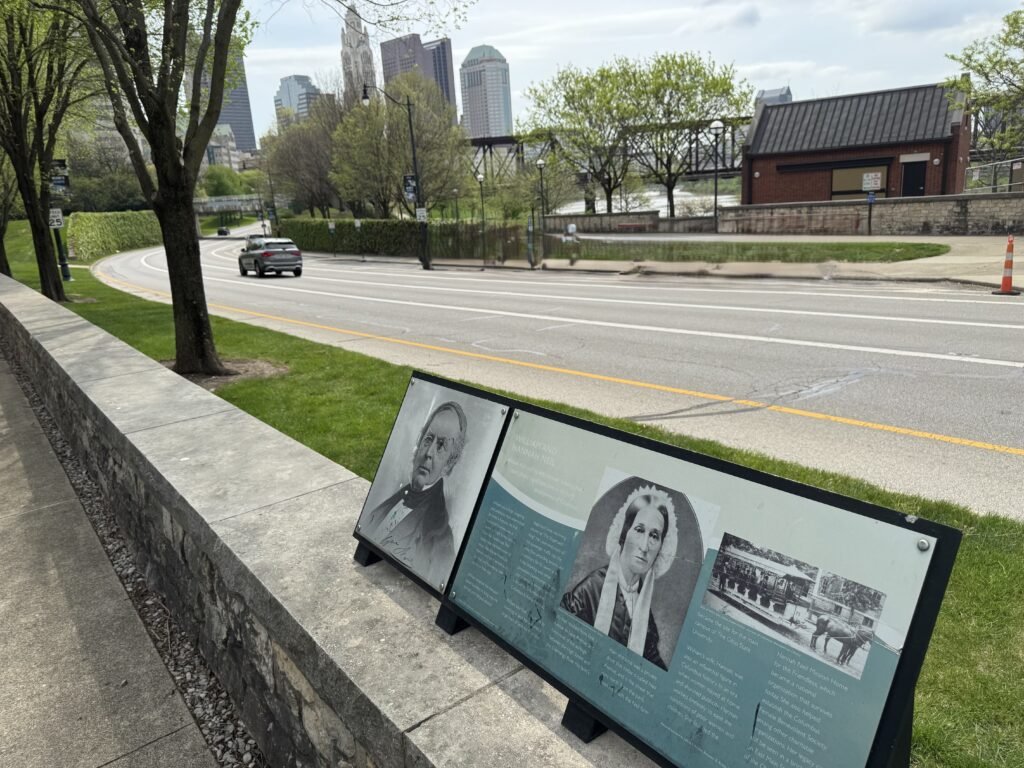
At social functions in the Neil household, Hannah, the wife of one of Columbus’ first millionaires, William, might be wearing the only dress she owned. She had given all others to the needy women of the area.
The Neils arrived in Columbus in 1818. Hannah was 24. They would have seven children together. William got a job as a bank teller but soon ventured out on his own, buying into a stagecoach business. He also bought downtown real estate for a bargain five dollars per acre.
Hannah Neil was a dedicated friend of the poor. Almost every fall, she would distribute hams, sausage, and other pork in barrels along with bedding and clothing to the poor. She would drive around the city in her horse and buggy seeking out the needy in alleys.
William owned the first stagecoach line that ran from Wheeling, W Va to Cincinnati. He grew his business by purchasing more lines. He opened Neil’s Tavern across from the statehouse. The first Neil House was built on the site of his original tavern in 1839. The hotel consisted of 334 rooms, cost $100,000 to build and over its life housed fifteen presidents. It was the town’s center attraction.
William also bought a 300-acre farm north of town.
In 1833, the National Road arrived in Columbus Ohio bringing people and much needed commerce. It also brought the weary and the wayward. The city began finding homeless children left behind on the streets. Prominent homes would not uncommonly find a baby on their porch. Tired, scared and at-risk young girls and women were found unhoused.
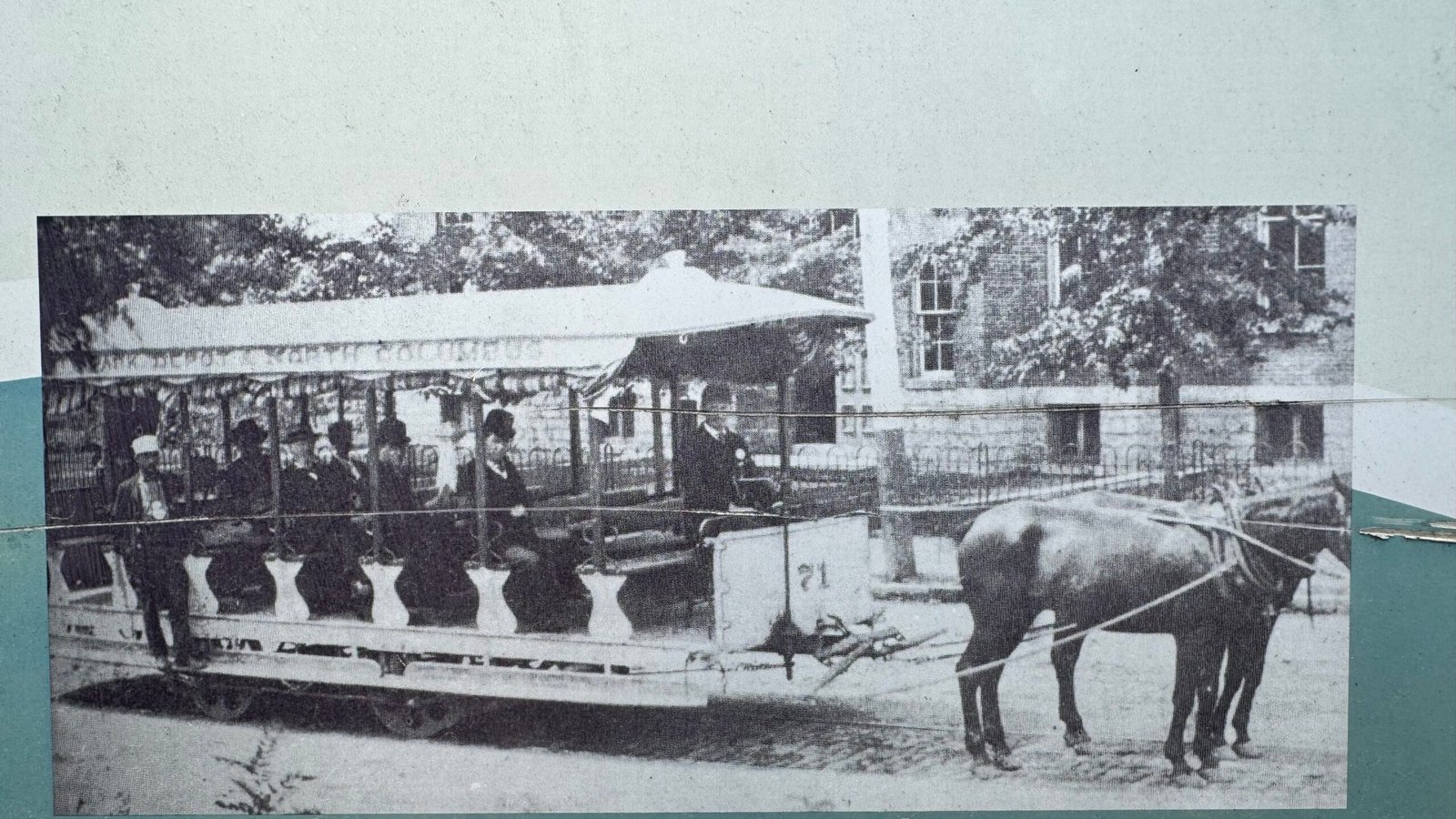
The slowness of travel in the early and mid-nineteenth century made a stranger’s hospitality necessary. There were many hardships in carving out a new home on the American frontier. It took courage, patience and the grace of God to survive.
One of the wealthiest women in the city, Hannah saw what was happening and did not stand idle. She acted and found several charitable organizations, beginning with the Columbus Female Benevolent Society in 1835. Their mission focused on helping women and children who were all alone.
“Hannah Neil was one of the most charitable women that ever lived in Columbus,” wrote Ben Hayes of the Citizen Journal. The Dispatch posted an article in 2013 entitled ‘Hannah Neil – the city’s guardian angel.’
In 1855, Hannah founded the Industrial School Association. It was initially a Saturday school program for the poor and homeless. When the old Soldier’s home at High & Rich Streets became available in April 1858, a day school was founded. The school was soon overwhelmed with four hundred children.
Hannah and William helped raise $12,000 to buy the Neville Mansion at 727 E Main St. After renovations, the home, which included a large parcel of land, opened its doors in April 1868 and became a school and a makeshift shelter.
Amidst this big move, Hannah Neil died of pneumonia on March 18, 1868. She was 74. Her funeral drew a packed, overflow crowd. Throngs of the poor she had touched lined both sides of the street of her procession.
One month after Hannah died, at their tenth anniversary meeting, the organization decided to change its name to the Hannah Neil Mission Home for the Friendless.
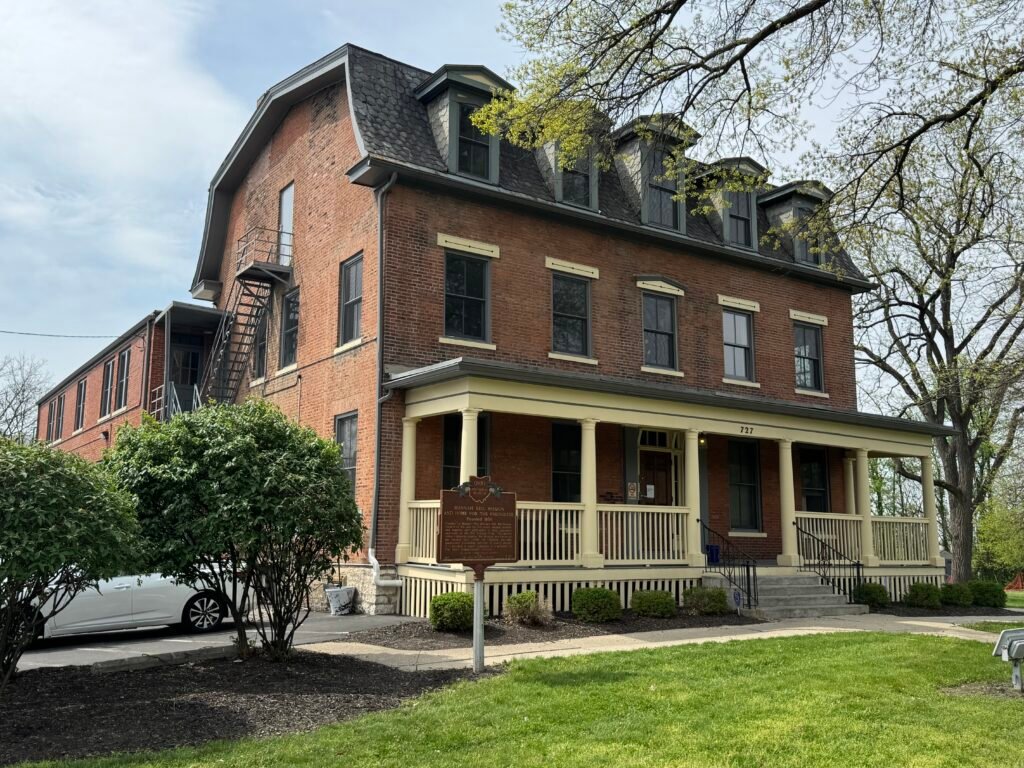
Columbus Dispatch columnist Johnny Jones recounted a story at the mission home in the 1950s, “only last Christmas, a big car drove up and a man brought in a bundle of toys and a gift of money with the simple statement, ‘you know this was my home.’”
More than one hundred years after her death, in October 1983, the great Johnny Mathis performed a benefit concert at the Ohio Theatre for the Hannah Neil Center for Children.
Though Hannah Neil’s work continues for at-risk children today, her center’s residential facility moved to twenty-two acres in Obetz and became part of the Starr Commonwealth School system, after 109 years.
The old mission house on East Main today is occupied by the ‘Home for Families’, which was named one of the Columbus Foundation’s ‘Nonprofits to watch’ in 2026. The Columbus Female Benevolent Society closed in the early 1930s after 98 years of service.
“Her true Christian spirit always shone in her sweet face, and I almost used to imagine that I could see a shining light around it. Her whole life was given up to doing good and working among the poor and in her church,” Lucy Neil Williams wrote in 1958 about her grandmother Hannah Schwing Neil.
The Neils didn’t just profit from the opportunities the National Road brought Columbus in the 1830s, they were there to help those left behind. William’s dedication produced a business empire and iconic downtown namesake. The third and final Neil House closed in 1980 and was torn down the next year to make way for the 37-story Huntington Center. Ironically, Hannah’s namesake transitioned about the same time.
William ‘Billy’ Neil died two years after Hannah. The couple owned most of the land between High Street and the Olentangy River and from Lane Ave south to First Ave. His family donated the property to the state where the Ohio State University sits today.
Sources: Columbus Citizen Journal, Aug 20, 1978, Ben Hayes; City Quotient: the Neil family legacy by Jeff Darbee, Dec 24, 2018, www.columbusmonthly.com; The Heritage of Hannah Neil, https://columbus.eastway.org; 11-25 Hannah Neil Mission and Home for the Friendless, https://remarkableohio.org; William and Hannah Neil, www.hmdb.org; Hannah Neil Mission, www.columbusmakesart.com; On this date in Columbus, Ohio by Tom Betti and Doreen Uhas Sauer, 2013; Historical Guidebook to old Columbus by Bob Hunter, 2012; Hannah Neil Mission, Seventh Manual, April 3, 1958; Columbus Neighborhoods, Hannah Neil by Doreen Uhas Sauer, WOSU, May 2, 2019; www.homeforfamilies.org; Hannah Neil Mission Centennial, Eighth Manual, April 27, 1958, http://digital-collections.columbuslibrary.org; Woman started home for homeless kids by Gerald Tebben, April 1, 2012, Columbus Dispatch; William ‘Billy’ Neil, www.touringohio.com; Featured picture shows the marker of the Neil family that sits at the corner of Long St & Neil Ave downtown in North Bank Park.