
By late 1942, the U.S. Army Corps of Engineers had acquired enough high-grade uranium to begin mass-producing fuel for plutonium reactors. “What they did not have was the know-how to convert uranium metal billets into a form capable of fueling reactors,” according to the U.S. Dept of Energy’s website.
The U.S. Army Corps of Engineers (USACE) prime contractor for plutonium production was DuPont Company. Dupont contacted Battelle Memorial Institute (BMI) in Columbus for its technical expertise. BMI, already under contract with the federal government’s Office of Scientific Research & Development, had the technical expertise, but did not have the necessary equipment. A frantic search for a fabrication shop in the Midwest with an extrusion press ensued.
In February 1943, DuPont found and contracted with B&T Metals in Columbus, less than five miles from BMI, to process highly radioactive uranium. B&T, owned by 55-year-old Lyman Beecher Kilgore, had an extrusion press that could be used to extrude uranium billets into rods. A ‘special department’ was set up on the second floor of the B&T factory at 425 W. Town Street. Twelve workers (six black and six white) were sworn to secrecy. While the rest of the plant dealt with aluminum, the special department “handled a metal with strange properties” for eight months during WWII.
Lyman Beecher Kilgore was born in Hillsboro in 1888. In 1923, he, his wife Mabel and two daughters moved to Columbus where Lyman got a job on an apple farm outside of town pruning trees, picking and pressing apples. Together, the family lived frugally. To save money, there were no movie nights out and Mabel cut the family’s hair and made their own clothes.
In the late 1920s, Lyman took a job in Columbus at B & T Floor Co (corner of N Front St & Long). He soon developed into a skilled craftsman and mechanic. B&T focused on the manufacture of aluminum hardware used to affix linoleum flooring. He took initiative and was a great co-worker, using his own money to buy supplies the company needed like carpeting, linoleum and varnishes.
Still, somehow, Kilgore managed to save money. In the early 1930s when he found out B & T was not doing well financially and were considering filing for bankruptcy, he decided to make an offer.
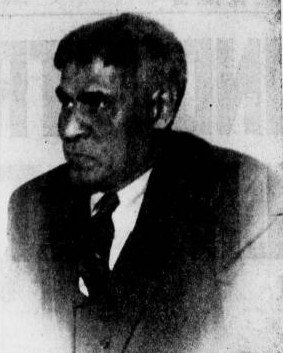
the Ohio State News, Aug 1948.
Kilgore showed proof of his purchases and made an offer that was accepted in 1932. Lyman saved the company from bankruptcy, took over handling the money and retained all officers in their capacities, including president William Bonnell.
Lyman possessed dynamic energy, lived simply and quietly, avoided publicity during his lifetime, was kind, dependable, tenacious and had the ability to bring people together, regardless of race. His only affiliation beyond his business was with the Mt Vernon AME Church.
Lyman dove headfirst into B&T, shifting the focus and expanding the business. He created a method for fastening metal trim to an object completely concealing nails, screws and/or rivets called Chromedge and secured copyrights. It was a big hit.
In 1935, he purchased a 100,000 square foot factory – the biggest real estate deal that year in Franklinton – at 425 W. Town Street. Kilgore grew his business, purchasing a semi-trailer truck and internalizing shipping. He also purchased an aluminum extruder. Then came the war. And the top-secret uranium extrusion project.
“Rays would come off of extruded bars (uranium) like heat waves off the highway,” retired B&T worker Cecil Campbell (88) told the Dispatch in June 2005. “If two extruded bars would roll together by accident, it would cause a spark or small explosion, sometimes causing a fire.” Campbell said there were no gloves, masks or ventilation added for the top-secret project and that he had touched each piece of uranium with his bare hands.
By August, in less than seven months, the shop had extruded 336,000 pounds of uranium billets into rods to fuel the X-10 graphite reactor in Oak Ridge Tennessee and a test reactor at Site A, a secret location outside Chicago. These reactors produced plutonium that could be used in the first atomic weapons.
There was a lot of security surrounding this project. Armed guards stood and watched the workers do their jobs and, according to the Dispatch, “guards with pistols drawn took the rods from the plant.” Workers were required to undergo weekly physicals and extensive medical screenings every month. B&T’s workers did not know what the uranium ultimately was being used for and B&T’s role in WWII was kept secret until after the war.
In Feb 1948, Lyman had surgery at the Crile General Hospital in Cleveland where he was kept for a couple of weeks. He went back to work a week after he returned to Columbus, against his doctor’s orders.
Lyman Beecher Kilgore passed away at his home on N 21st St in the Bronzeville area on July 31, 1948. He was 60. More than a thousand people attended his funeral with the Rev. A. C. Sumpter of Toledo, former pastor of Mt. Vernon Ave. AME Church in Columbus, officiating. Burial was in Greenlawn Cemetery.
Lawrence Tolbert, Lyman’s son-in-law, took over operations at B&T. And then, a third generation, Lawrence’s son David succeeded his dad.
While most manufacturing operations at B & T ceased in 1982, the company’s aluminum operation continued with a staff of twenty. Residual radiological surveys by the U.S. Dept of Energy showed uranium contamination in 1988. The site was remediated in 1996 and by 2001 the Dept of Energy certified the site safe and released it for unrestricted use.
B&T Metals, one of the first African American owned factories in the United States, employing at its peak more than 500 workers on three shifts, completely phased out operations by 2005.
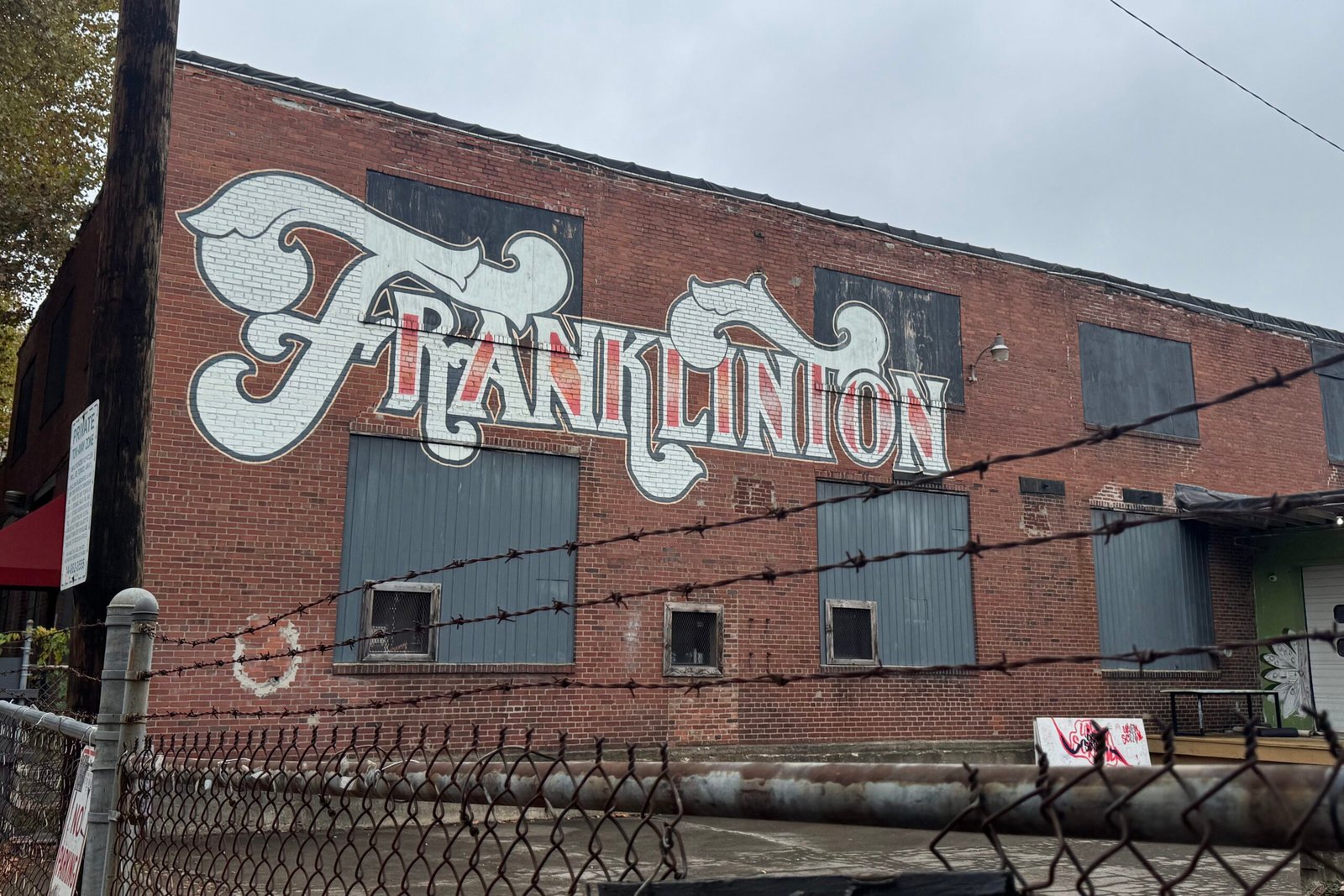
In 2017, Urban Smart Growth developed the old B&T Metal site, repurposing the space into Chromedge Studios which hosts thirty individual art studios and a 2500 square foot photography studio in the thriving Franklinton Arts District.
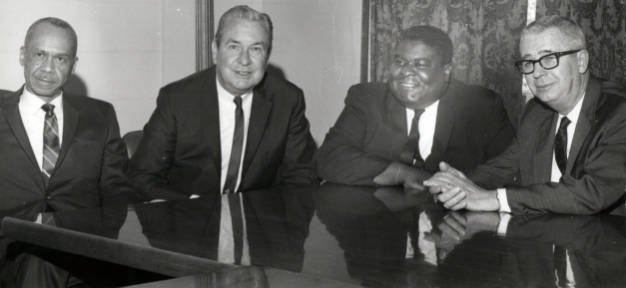
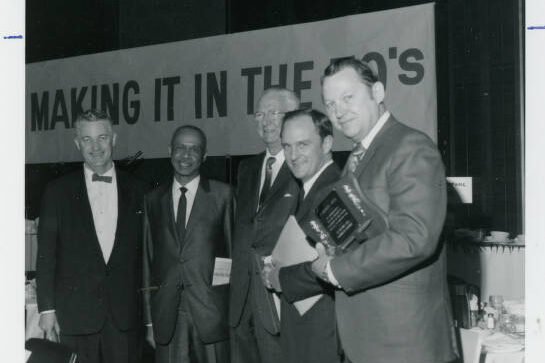
Sources: Inside Story Of Kilgore’s Rise by George Lawrence, Saturday, August 7, 1948, The Ohio State News; Radioactive Franklinton: the story of Lyman Kilgore, B&T Metals and Columbus’ role in building the atomic bomb, Nov 21, 2025, The Columbus Chronicle hosted by Connor Dunwoodie, https://podcasts.apple.com; B&T Metals: the African American-owned company that helped win the race for the atomic bomb, Feb 3, 2022, U.S. Department of Energy, www.energy.gov; ’43 uranium work led to cancer, man thinks by Felix Hoover, June 21, 2005, Columbus Dispatch; Throwback Thursday: Franklinton’s Chromedge Studios radioactive past by 614Now staff, Feb 7, 2019, www.614now.com; Atomic Snapshots: B&T Metals, www.atomictourism.us; B&T Metals, www.ohioexploration.com; The history of Chromedge Studios, www.chromedgestudios.com; African American Settlements and Communities in Columbus, Ohio by Dr Toni Smith and Ed Lentz, Dec 2014, www.columbuslandmarks.org; David L Tolbert, Obituary, www.dignitymemorial.com; Featured picture is Chromedge Studio at 400 Square in Franklinton as it sits today. Picture three also includes Hayden Sayre (Columbus Foundation in the middle) and Dan Galbreath (president of the Pittsburgh Pirates second from the right); Picture four also includes a UAW rep and federal negotiator.