
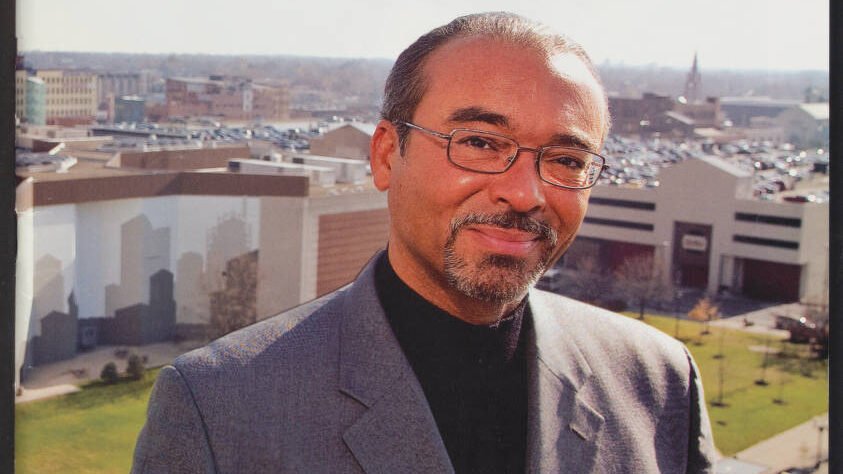
In 2012, Columbus, Ohio turned two hundred years old. Our mayor at the time – Michael Coleman – was friends with President Obama and called him to do a video honoring the city. In the video, Obama says, “you really have earned the title of America’s biggest small town.” The mayor immediately said, ‘nope, can’t use it’ and stormed out of the room.
Franklin County Commissioner Kevin Boyce, who was part of Coleman’s team at the time, didn’t know what to think. His staff was left looking at each other with blank stares. In the end, the video got edited. “I am still not sure to this day,” says Boyce, “if editing a video of the President of the United States is a federal crime or not.”
Michael B Coleman loved being mayor of Columbus, America’s fifteenth largest city. He served at one of the most transformational times in its history. Though many projects like the construction of Nationwide Arena, the emergence of two major suburban malls, the installation of the cap in the Short North and the revitalization of the university district were well underway, he most assuredly had an impact on the Columbus neighborhood known as – the downtown.
Michael, Columbus’ first African American mayor, served an unprecedented four terms, from 2000 to 2015. He was the longest serving mayor in the city’s history.
“That bigger than life personality was not just about him. It transcended to who we are as a city,” said Boyce in 2024. “As a city kid, born and raised, to have someone like that be a champion, that we can be the next leader not only in Ohio, but the country was inspirational to me.”
The mayor wanted to bring a swagger to this big smalltown.
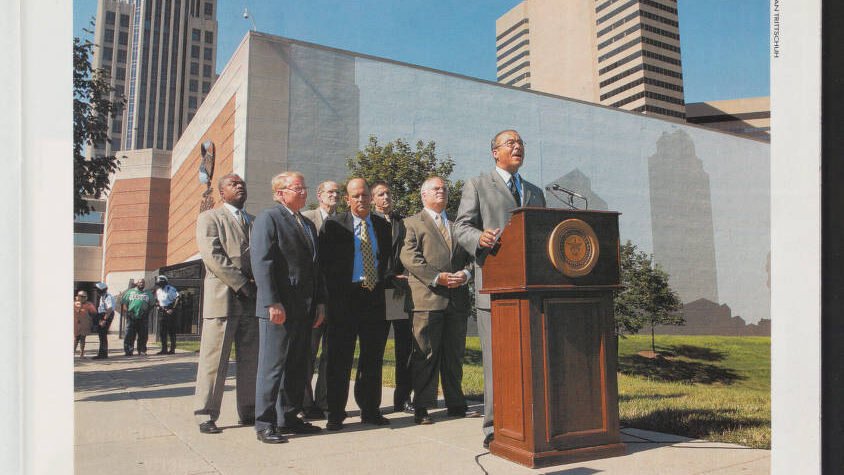
In 2002, Coleman introduced a ten year downtown strategic development plan, incentivizing office and residential relocation and development in hopes of stimulating capital investment. “We formulated a point of view that the residential part was the key to everything else,” said the mayor.
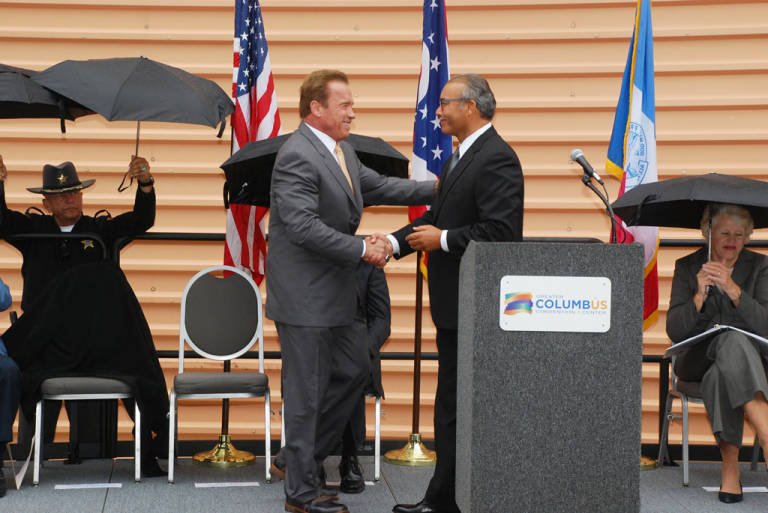
His administration attracted more than $7 billion in private investment, most of which went to the downtown core. New residential, office and commercial projects were developed in the Brewery District and the immediate downtown along with new entertainment and social venues. Areas became districts – Arena, Brewery, Old Town East, King-Lincoln.
“When I started focusing on downtown,” he said, “I wanted people to understand that it was a neighborhood too. In fact, downtown is everybody’s neighborhood, because what do we want to be? The best city in the nation to live, work and raise a family.”
The city opened North Bank Park and the Scioto Mile on the riverfront. The inner core saw a 45% growth in the number of 20 to 40-yr-old residents, according to an article in USA Today in April 2011. Office vacancy rates fell from 24.3% in 2002 to just 11% in 2011. The 500-room Hilton Columbus downtown hotel opened in 2012.
The city was on a roll.
Columbus’ steady population growth, unique for a cold weather midwestern city, clocked in at around eight percent annually since the 2000 census. The Columbus Blue Jackets took to the ice as the big and beautiful Nationwide Arena opened for all to see on Oct 7, 2000.
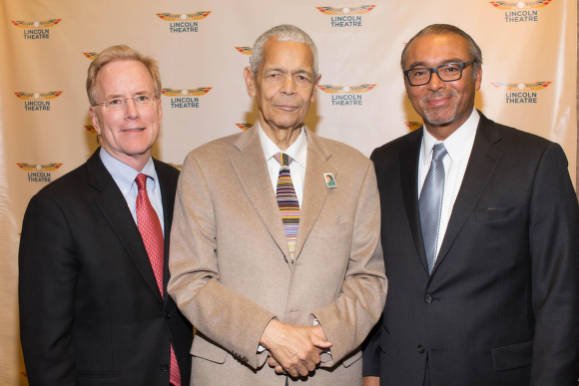
One of the mayor’s projects – the Lincoln Theatre on Long Street – had been closed for decades. Past renovations and management failures made it a target for the wrecking ball despite its rich history, hosting such musical artists as Nancy Wilson, Count Basie, James Brown, Miles Davis, and Etta James.
City Council endorsed his plan in July 2002, purchased the theater property for $1 million and began a seven-year, $13 million renovation.
In July 2009, the new 588-seat Lincoln Theatre opened with meticulously restored Egyptian-themed decorative elements, new seating and new stage equipment. Broadway star Maurice Hines performed before a sold-out show on opening night; Trombone Shorty played two nights the following weekend.
The city’s big central mall, meanwhile, was hemorrhaging money while trying to deal with an 80% vacancy rate. Coleman called it “a defective suburban mall plopped down in the middle of an urban community.”
On March 5, 2009, the 1.2 million square foot City Center Mall closed its doors.
The city then managed not only to boot the management company but purchase the property at a bargain price. Demolition took place from October to March 2010. One year later, on May 26, 2011, the 6-acre Columbus Commons opened.
Coleman’s passion for Columbus ran deep. While mayor, he rode with CPD and one night at 2AM they rounded up about a dozen teenagers who were up to no good, cuffed them and called each of their mothers. When the mamas arrived, “let me tell you something,” Coleman said, “we had to hold the parents back.”
In his address to the graduates of the Ohio State University in 2010, Mayor Coleman credited his drive and determination to his grandmother Cleo who was a hotel maid in Madison, Indiana and who walked every day up two steep hills to get to a hotel she herself could not stay in. On the really hot or snowy cold days she would tell herself, “you’ve come too far to stop now.”
Michael B Coleman was Columbus’ best mayor in my lifetime. He was old school. He talked the talk and actually walked the walk. He invested in and brought new life to our downtown neighborhood, he made our city safer, he raised the standard of living and he was a mayor for everyone regardless of race, religion or party.
And his legacy will be felt for decades.
Sources: Michael B Coleman, 2018 Walk of Fame, Lincoln Theatre, www.lincolntheatrecolumbus.com; Michael B Coleman, Partner, Ice Miller, www.icemiller.com; Columbus honors its first black mayor, Kerry Charles, NBC4 Columbus, Nov 13, 2024, www.youtube.com; Michael B Coleman – Mayor of Columbus, Ohio by Brian Baker, City Mayors, www.citymayors.com; Black Art in Blacklick: Michael and Janelle Coleman’s stylish home by Jill Moorhead, Sep 19, 2024, Columbus Monthly, www.columbusmonthly.com; The Honorable Michael B Coleman, The History Makers, Apr 4, 2012, www.thehistorymakers.org; Columbus – the story of a city by Ed Lentz, 2003; Swaggertime by Jeff Long, Columbus Monthly, March, 2012; Historical guidebook to old Columbus by Bob Hunter, 2012; Mayor Michael B Coleman, Feb 4, 2010, www.10tv.com; Lincoln Theatre, Support Black Owned, www.supportblackowned.com; Mayoral election 2011: Interview with Michael B Coleman by Walker Evans, Oct 14, 2011, www.columbusunderground.com; Interview with Michael B Coleman by Walker Evans, Dec 30, 2015, www.columbusunderground.com; New life for the Lincoln by Sonya Huber, November 2003, Columbus Monthly, https://digital-collections.columbuslibrary.org; The Reunion: Celebrating Michael B Coleman’s Historic Election, City of Columbus, Nov 18, 2024, www.youtube.com; Long Street Bridge & Cultural Wall 10 year Celebration, City of Columbus, www.columbus.gov; Michael B. Coleman’s transformation of Columbus, Ohio, June 27, 2025, MahoganyColumbus, www.issuu.com; Featured picture of Mayor Coleman on the cover of Columbus Monthly magazine, Jan 2008.